
Classroom energy disappears fast once participation starts feeling predictable. Students stop raising their hands, group activities slow down, and even simple review sessions begin sounding repetitive after the third question. A custom wheel game changes that atmosphere almost immediately because students react differently once suspense becomes part of the lesson.
The shift is visible in real classrooms. One student leans forward waiting for the next category. Another starts paying attention because the wheel might land on their row next. Even quieter students often participate more once the outcome feels random instead of socially forced.
Inside broader interactive classroom systems built around participation and learning flow, spinning mechanics work well because they combine structure with visible unpredictability.
Why classroom wheel games increase participation faster than normal review sessions
Traditional classroom review often depends on the same students answering repeatedly. Others disconnect quietly because they assume someone louder or faster will respond first anyway. That imbalance becomes more obvious during long afternoons or low-energy periods before breaks.
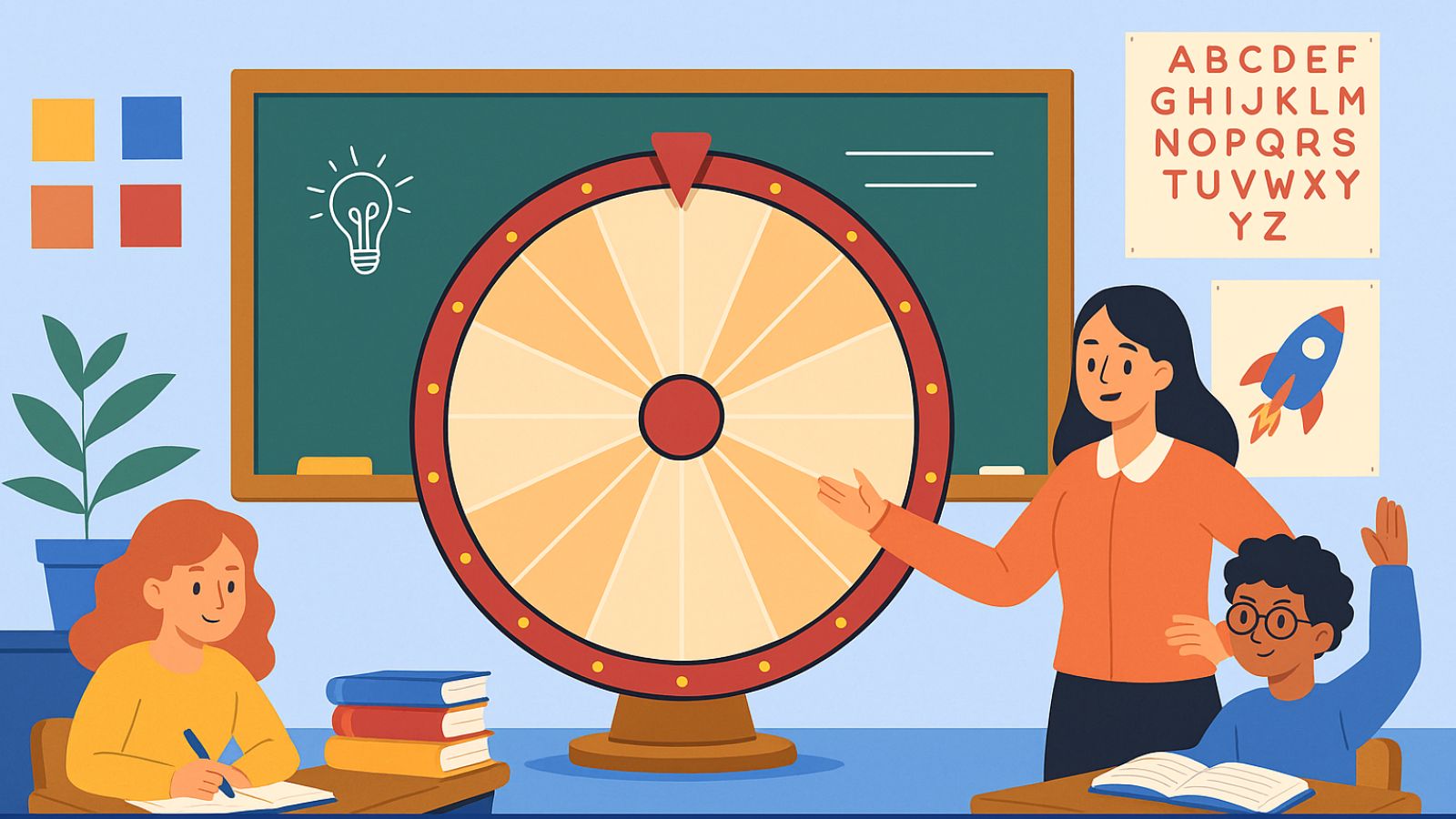
A spinning wheel interrupts that pattern. The room starts watching together instead of waiting passively for instructions. During vocabulary games, science reviews, or quick math challenges, students usually react to the suspense before the actual question even appears.
That reaction becomes especially useful during language activities where students hesitate to volunteer publicly. Teachers using randomized classroom participation systems often notice stronger engagement once students focus on the spin itself instead of worrying about being singled out manually.
How to build a classroom wheel students actually enjoy using
The best classroom wheels stay simple. Too many options slow the game down and make instructions harder to follow. Most teachers get better results with smaller category sets that students can understand immediately after the wheel stops.
Elementary classrooms often use color prompts, alphabet games, or quick challenge categories to keep movement active between lessons. Systems built around letter based classroom activities that trigger fast student reactions usually work well during reading practice, spelling games, and vocabulary warmups.
Middle school and high school environments respond differently. Older students engage more when categories feel competitive, creative, or unpredictable instead of childish. Topic debates, timed challenges, and presentation prompts usually create stronger classroom momentum.
Why surprise elements improve classroom focus during group activities
Students pay closer attention once they know the wheel might suddenly change the activity direction. Small surprise mechanics create emotional resets that keep classroom energy from flattening out halfway through the lesson.
That does not require complicated rewards. Simple twists work surprisingly well. One wheel section might trigger partner discussion. Another could create a fast drawing challenge or a short presentation round. During review days, funny prompt systems often help students stay mentally active longer than static worksheets.
Interactive formats connected to lighthearted classroom prompts that encourage spontaneous group reactions usually perform best when students start losing energy late in the lesson.
How teachers use wheel systems to organize lesson flow more efficiently
Some teachers now use spinning systems beyond games entirely. Classroom wheels organize discussion order, rotate project topics, assign teams, and even structure homework review sessions without repeated manual decisions.
That flexibility matters because classroom momentum breaks easily once transitions become messy. A visible spinning system helps students understand what happens next before confusion spreads through the room.
Structured tools linked to rotating classroom topic systems designed around lesson pacing often reduce downtime because students stay focused on the next visible outcome instead of waiting for long verbal explanations.
Students usually respond better once classroom structure feels interactive instead of repetitive.
Teachers also adapt wheel systems for completely different age groups. Younger students react strongly to visual suspense and movement. Older students often respond more to competition, timed challenges, or unpredictable presentation topics during collaborative work.
Even simple digital systems built around fast randomized classroom outcomes that reduce repetitive teacher decisions can improve pacing during attendance selection, group assignment, quiz order, or participation rotation.
The broader ecosystem behind interactive spinning systems designed for participation, creativity, and group engagement keeps expanding because wheel based activities adapt naturally to classrooms, livestreams, workshops, tutoring sessions, and collaborative learning spaces.
Classroom wheel games work best once students start reacting to anticipation instead of just instructions.