
The music is on, snacks are ready, and everyone has arrived but something feels slightly off. People are talking in small circles, checking their phones, waiting for something to pull the group together. You can feel the energy hasn’t fully clicked yet.
This is a common moment in any gathering. The difference between a good party and a memorable one often comes down to a single shift: turning passive presence into active participation.
So instead of asking “What should we do next?”, what if the answer appeared instantly and made everyone react at the same time?
How a Simple Spin Changes the Energy of a Room
When you introduce a spin-based game, something immediate happens. Attention shifts. People stop drifting and start watching. Even before the wheel lands, there’s anticipation.
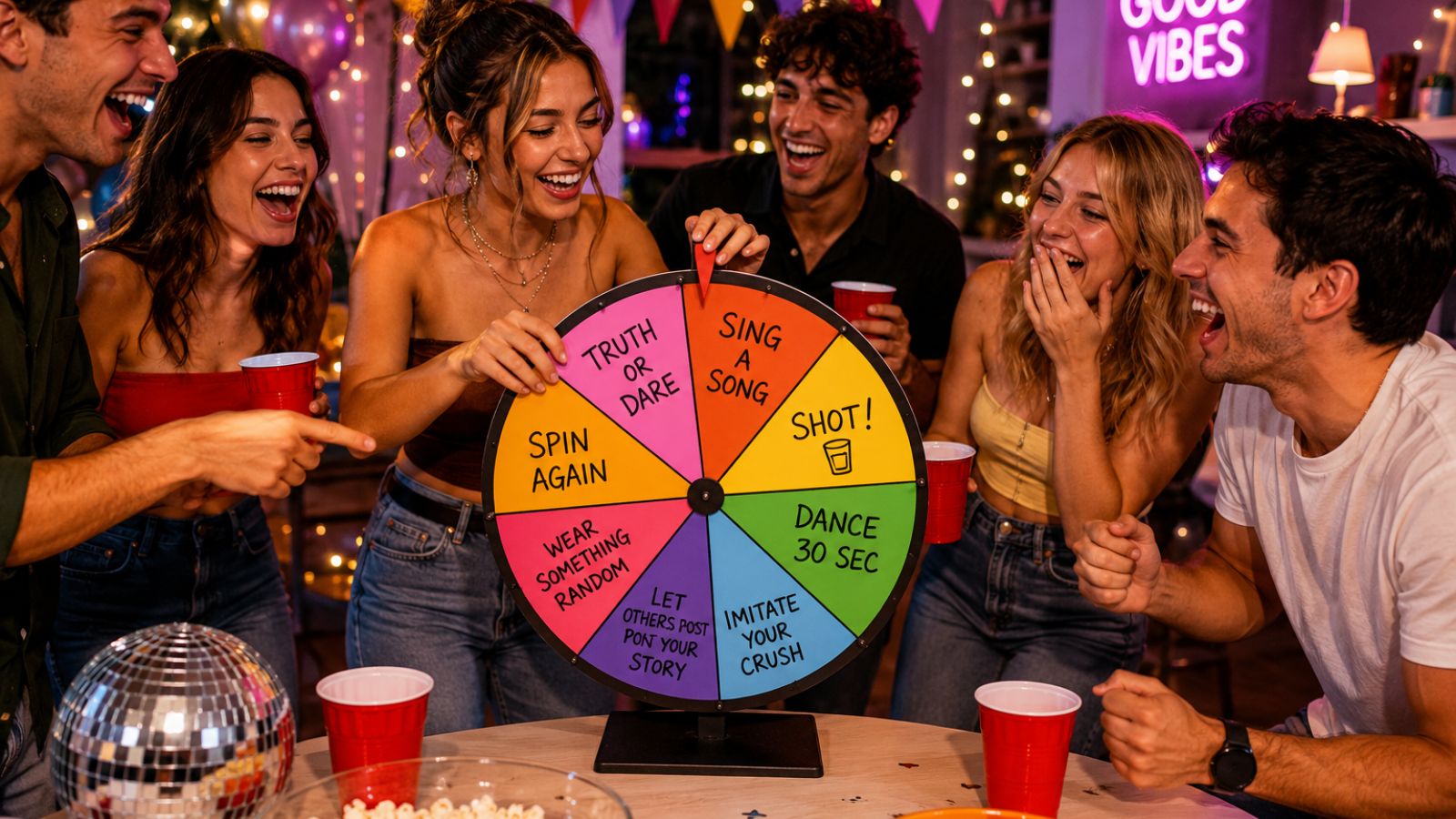
Imagine a group standing around, casually chatting. You spin once, and suddenly everyone is focused. The result appears, and within seconds, people are laughing, reacting, or getting involved in whatever comes next.
This works because it removes hesitation. Instead of suggesting an activity and waiting for approval, the decision is already made. That instant clarity keeps the momentum alive.
Hosts often use setups like a ready-made game night spinner with mixed challenges to trigger these moments quickly. It’s not about the complexity of the game it’s about creating a shared reaction.
Once that first interaction happens, the tone of the entire gathering shifts.
Why Parties Slow Down Without Structured Interaction
Without a clear activity, groups tend to fragment. Conversations split, energy levels vary, and there’s no central moment that brings everyone together.
Even when someone suggests a game, it often turns into a discussion: “Do we want to do that?” “Maybe later.” “What else is there?” That small delay can drain momentum before anything even starts.
This is where unstructured fun becomes a problem. Too many choices, not enough action.
Using something like a shared party activity picker removes that gap completely. Instead of discussing options, the group reacts to a result. The decision is instant, and the energy stays intact.
The difference isn’t just speed it’s the absence of friction. No negotiation, no overthinking just movement.
What Makes Spin-Based Games Feel More Fun Than Planned Activities
Planned games rely on agreement. Everyone needs to be on board before anything starts. But spin-based games flip that dynamic they start first, and people follow.
There’s also a psychological shift. When the outcome is random, people feel more open to it. It’s not someone’s idea being accepted or rejected it’s just what happened.
Picture this: the wheel lands on “act out a scene” or “swap seats.” Normally, someone might hesitate. But because the result feels external, people are more likely to go along with it.
That unpredictability creates memorable moments. Not because every outcome is perfect, but because it breaks the usual pattern of repetition.
Some groups take it further by using a creative improv-style challenge spinner to push interactions into unexpected directions. It adds a layer of spontaneity that planned games rarely reach.
Over time, those unexpected moments become the highlight of the night.
When a Single Interaction Turns Into a Full Experience
It often starts with one spin. Then another. And before you notice, the entire gathering is built around it.
What began as a simple decision tool becomes the structure of the evening. People wait for their turn, react to outcomes, and stay engaged without needing constant direction.
In some cases, hosts even combine formats using something like a rotating name picker for assigning turns or roles alongside activity wheels. This keeps participation balanced while maintaining unpredictability.
The result isn’t just a series of games it’s a shared experience where everyone feels part of what’s happening.
And the best part is how natural it feels. No long explanations, no setup delays just one action leading into the next.