

 By Alex Bennett
Published
By Alex Bennett
Published
What Should I Do Wheel when you're tired of deciding.
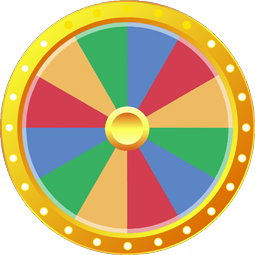
Cant Decide What Should I Do Now Wheel is a free spinner listing 42 options — Go For Walk, Nap 20 Min and Look Out among them. Tap once and the pointer picks one at random.
The what should i do wheel fits the moment when your free time turns into another task. You could clean, rest, move, read, plan, or start something useful, but comparing all of it makes the next step feel heavier than it should.
Planning sounds responsible. In practice, it often turns a small gap in the day into a crowded mental menu. The wheel works differently it gives the moment one direction before the pause becomes another unfinished loop.
The problem is not laziness. All those tiny choices pile up and wear you out. Each option asks for a reason, a priority, and a better alternative. That is why a simple prompt can feel more useful than another self-made schedule.
Why unfinished tasks keep pulling your attention sideways
Multitasking feels productive because every option still looks active. You answer one message, notice the desk, remember a small chore, then open something else before any task closes. A planner may list the choices, but it does not always stop the switching.
A what should i do wheel cuts that sideways pull by making one harmless action the focus. In the same daily activity space, birthday activity pressure with a clearer prompt shows how a specific context can reduce the mental noise around choosing.
Once one action is picked, the brain has less room to negotiate. Start there. Let the next step be small enough to finish.
Structured planning versus random prompts during a slow day
Structured planning is useful when the day has deadlines, priorities, and real consequences. It is weaker when the question is simply what to do with an open pocket of time. Ranking every possible activity can create more friction than the activity itself.
A random prompt wins in that smaller moment because it does not ask for a perfect reason. It gives you a starting point. For family-friendly choices, shared activity ideas without long debate can turn the same kind of pause into something easier for everyone to follow.
This is the comparison that matters planning tries to optimize the whole day, while the what should i do wheel tries to restart movement. Those are not the same job.
Small daily choices can drain momentum faster than expected
Getting tired of deciding rarely hits all at once. It usually builds through small moments what to start, what to delay, what deserves energy, what can wait. By the time you notice it, even a harmless choice feels oddly expensive.
That is where a random activity generator becomes practical. It lowers the cost of choosing. If the question turns into a sharper yes-or-no moment, a direct action decision without extra weighing can handle that tighter kind of hesitation.
Do not keep reopening the same options. Pick the result, test it for a few minutes, then continue or switch with less guilt.
Immediate action triggers help rebuild productive flow
Momentum does not always come before action. Often, action has to come first. A small task, a short stretch, a quick tidy-up, or a calm reset can create the first visible sign that the day is moving again.
Compared with waiting for motivation, a prompt is less dramatic and more reliable. It gives the mind a clean instruction instead of another open-ended question. That matters when behavioral inertia has already made the room, screen, or schedule feel sticky.
The result does not need to be perfect. It only needs to be safe, simple, and specific enough to begin.
Immediate Action Logic
The unique value of this page is not randomness alone. It is the reset between mental clutter and physical movement. A broad random choice system for neutral prompts can support that same logic when the situation is not tied to one exact category.
Think of the wheel as a pressure release valve for ordinary time. It does not replace judgment, planning, or responsibility. It simply removes the first layer of delay so the next harmless action can happen.
That wider habit connects naturally to the full collection of decision tools in one place when different kinds of stuck moments need different formats. Some days need a yes-or-no answer. Others need a random prompt, a category picker, or a playful nudge that breaks the stall.
Used this way, the what should i do wheel stays practical. It gives your attention one target, lowers opportunity cost, and helps you stop treating every small choice like a major life decision.
Spin once, choose the next step, and move.
What kind of activities are on this wheel?
The wheel contains simple everyday actions covering chores, relaxation, and quick physical tasks. It includes options such as Go For Walk, Water Plants, Wash Dishes, Stretch Now, and Read Book. If you want different activities, you can edit the list next to the wheel or use Text Mode to paste your own ideas one per line. The wheel redraws instantly as you type.
Can I remove activities like Clean Desk once finished?
You can turn on an option that automatically removes each winning entry so it cannot be chosen twice. This is helpful if you finish tasks like Clean Desk, Sort Mail, or Clear Trash and want to spin again for a new activity. The wheel updates immediately after each spin, and you can also delete or add items manually in the side list.
How do I embed this decision wheel on my blog?
You can embed the wheel on your website or blog using the code available on the embed page. Navigate to the /embed page to get the HTML snippet for your site. The embedded picker is free, runs on phones and tablets, and works without an account. Visitors can spin it directly from your web page while retaining its custom colours.
Does every activity on the wheel have an equal chance?
Every entry has an equal chance of being selected because all slices are identical in size. The picker selects the winner using the browser's cryptographic random generator rather than a biased algorithm. Whether the slice is Nap 20 Min, Plank 1 Min, or Call Friend, each item receives equal mathematical odds on every single spin of the wheel.
More Decision wheels you might like
More wheels from the same category. Pick one and spin it in seconds.