


 By Alex Bennett
Published
By Alex Bennett
Published
Daily Task Picker for Clear Workday Direction
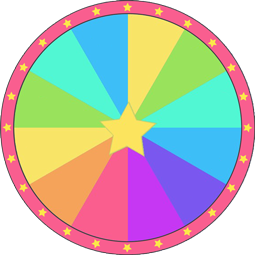
Daily Task Wheel is a free spinner listing 33 options — Write Note, Sort Box and Done among them. Tap once and the pointer picks one at random.
The daily task picker shows up right when your desk is full but your next move is unclear. Tabs are open, notes are half finished, and every option feels equally urgent. Instead of choosing wrong or delaying again, you need a single direction that removes the stall.
That moment is not about lacking tasks. It is about being unable to start one cleanly. A structured randomizer shifts the focus from “what matters most” to “what gets done next.”
You sit there with a list that keeps growing. One task feels heavy, another feels boring, and a third looks important but unclear. Nothing closes the gap.
The hesitation builds quietly. You re check emails, rewrite the same line, adjust small details that do not move anything forward. The day moves, but the real work does not begin.
Work routines under pressure that need external task assignment
In busy hours, internal prioritization breaks down. Everything competes at once. A task rotation that removes manual prioritization pressure changes the dynamic instantly. Instead of ranking tasks, you accept one outcome and move.
That shift matters. It removes negotiation inside your head. One clear task replaces ten half starts, and the workflow stabilizes without forcing extra planning.
Structured planning versus random task flow in real workflows
Planning systems promise control, but they often slow execution when the list grows too dense. A focused productivity path built around immediate task selection creates forward motion instead of perfect structure.
In practice, this means less time adjusting priorities and more time completing actions. The daily task picker becomes a trigger, not a replacement for planning. It activates movement when structure alone cannot.
Repetitive task cycles and how they increase mental load
Repeating the same type of decisions drains attention. Even small choices start to feel heavier. A single assigned task that breaks repetitive decision loops interrupts that pattern and resets focus.
This is where the daily task picker works best. It removes the need to “decide again” and replaces it with a clear starting point. Momentum builds from action, not evaluation.
Managing progress when tasks are assigned externally
When tasks are assigned instead of chosen, progress becomes easier to track. Each action has a clean start and finish. A collection of rotating decision tools across different task types can extend this approach into larger workflows.
The result is not randomness for its own sake. It is controlled unpredictability that keeps the system moving. The daily task picker keeps the rhythm steady even when energy drops.
Why external assignment works differently
When the task is not self selected, resistance drops. You stop comparing and start doing. Studies referenced in random selection behavior patterns in task systems show that externally triggered actions reduce hesitation and improve completion rates.
This effect is subtle but powerful. The brain accepts the result as final, which shortens the delay between thinking and acting.
Sometimes the simplest shift is enough. Let the next task be decided outside your usual loop.
Over time, that small change builds consistency. Work no longer depends on perfect prioritization.
The pattern extends beyond a single moment. When hesitation repeats across different tasks, expanding into a broader system of decision based workflow tools creates a more stable structure for daily execution.
A steady workflow begins with one assigned task
What daily tasks are included on this wheel?
The wheel includes thirty common workplace actions, short breaks, and maintenance chores. It mixes focused responsibilities like Deep Work, Admin Work, and Fix Error with quick reset activities such as Drink Tea, Walk Park, and Stretch Now. This balanced variety helps you complete routine administration like Check Mail or File Doc while keeping your routine manageable throughout the day.
Should I do the selected task immediately after spinning?
Doing the selected task right away is the intended way to use this wheel. Whether the wheel selects Deep Work, Desk Clean, or Call Friend, committing to the result keeps your day moving forward. You can also turn on the option to remove each winner after it lands so you do not repeat completed items like Check Mail or Water Plant during the same workday.
Can I customize the task list with my own chores?
You can edit the task list directly in the panel next to the wheel. The wheel redraws instantly as you type new items or delete presets like Sort Box and Clean Shelf. You can also switch to Text Mode to paste a complete schedule at once, or import files formatted as CSV, TXT, or Excel spreadsheets. There is no fixed limit on entries.
Does every task have an equal chance of being picked?
Every task on the wheel has an exact equal probability of being selected on each spin. All slices are constructed with identical physical dimensions on the wheel. The result is calculated using your web browser's built-in cryptographic random generator rather than a rigged outcome. Whether an item is labeled Prep Talk, Log Hours, or Sketch, each entry always receives the exact same mathematical odds.
More Decision wheels you might like
More wheels from the same category. Pick one and spin it in seconds.





Pick one solo activity that matches tonight’s personal mood