

 By Alex Bennett
Published
By Alex Bennett
Published
The Random Decision Choice Every Uncertain Planner Needs
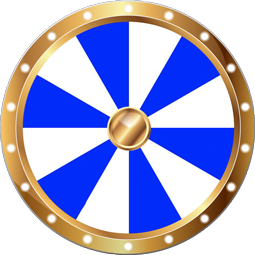
Decision Choice Wheel is an online decision wheel built from 40 equally sized segments, among them Go Now, Action and Low. Every spin returns a single result.
Two plans sit open on the laptop, and both look reasonable enough to defend. That is the trap. A Random Decision Choice becomes useful when the real problem is not a lack of options, but the way your mind keeps reopening the rejected path after every argument.
You review the facts, then the mood shifts. You lean toward action, then delay plan starts to sound safer. You imagine the new route, then the safe path pulls you back. Nothing is clearly wrong, so nothing feels final.
This is where uncertainty starts charging rent. Go now, wait bit, ask friend, think fast, pause, start, stop, yes, no, maybe, later each option keeps a second door open. The longer both doors stay visible, the harder it becomes to commit to either one.
A random decision choice does not pretend to be wiser than your judgment. It gives your judgment a rule to stand on. Set the options first, accept the spin once, and the tense pause has somewhere to end.
Every Open Option Keeps a Second Path Alive
The freeze happens because each choice still has a defense. Try plan sounds productive. Skip it sounds protective. Bold step feels energizing. Wait feels responsible. Your brain keeps building cases for all of them.
A visible wheel cuts through that loop by turning the debate into one result. For choices where the issue is the fork itself, a clearer fork between competing paths helps when the decision needs a sharper either or frame before the final commitment.
The useful part is the reaction after the result appears. If the wheel lands on action and you feel relief, that tells you something. If it lands on delay plan and you feel trapped, that tells you something too. Do not rush past the reaction.
Logic Can Stall When Certainty Never Arrives
Logical review works until it starts repeating itself. Fact, brain, logic, goal, score, and result can all be considered, but they do not always produce certainty. Sometimes they only produce a more polished circle.
Chance helps when the review has already been done and the remaining friction is commitment. A simple result like done, wait, top, low, win, or chance can feel almost too plain, but plain is often what the overloaded mind needs.
For nights when the decision should stay very light, a simpler spin for low pressure calls can stop the process before a tiny choice becomes a full private debate.
For group visible or broader random selection, a wider random option field gives more room when the list includes several acceptable outcomes instead of one narrow decision. The format matters because too much structure can create more thinking, while too little can make the result feel thin.
Stop feeding the circle. The rule has to arrive before the mind asks for one more review.
Regret Shrinks When the Rule Comes First
Regret aversion gets stronger when the rule is invented after the result. If you spin, dislike the answer, and then change the standard, the wheel becomes another way to avoid commitment. That defeats the point.
Set the rule before the spin. One spin. Only acceptable options. No emergency reframe unless the result reveals a real problem, not just discomfort. If risk move is too risky, it should not be on the wheel. If safe path is too passive, remove it before the spin.
This is also where extra formats can help without reopening the main decision. If the route is settled but the next small step still needs a nudge, wheel formats for follow up choices can keep the original outcome moving instead of dragging the whole decision back to the beginning.
The rule protects you from rewriting the past five seconds. It also gives the future version of you a fair explanation the options were valid, the process was set, and the result was accepted.
Accepted Randomness Closes the Tense Pause
The tense pause ends when the result becomes usable. Random, luck, fate, heart, soul, mood, and fact may feel like different languages, but each can become a signal once it lands in front of you. The wheel turns uncertainty into something you can respond to.
A random decision choice works best for reversible choices where both routes are reasonable. It can settle whether to start now, wait, try a plan, ask for input, or take the safer route. It should not replace careful judgment for serious, unsafe, financial, medical, or irreversible decisions.
The closure is practical. You stop refreshing the same two plans. You stop defending both sides at once. You move with one selected outcome and reserve your energy for the next real step.
Outcome node
The outcome node is the point where uncertainty stops circling and turns into a usable direction. Add only outcomes you can honor go now, wait bit, new route, safe path, action, pause, yes, no, maybe, or later. Then let the result stand long enough to matter.
The broader random wheel logic behind neutral outcomes is useful because it separates the selection event from the emotional pressure around it. The wheel does not know which route you secretly want. That distance is exactly why your reaction becomes clearer.
Once the result appears, test it against reality, not fear. Can it be done safely? Is it reversible? Does it match the limits you set before spinning? If yes, the outcome has done its job.
Uncertainty does not only happen on one page or one night. It appears in errands, routines, plans, social choices, timing calls, and small commitments that keep asking for one more thought. In that broader pattern, decision pressure across everyday moments becomes easier to handle when each choice gets the right level of structure.
A random decision choice is not a shortcut around responsibility. It is a boundary around endless review. Use it when the thinking has become heavier than the choice.
Lock one outcome when uncertainty keeps circling
How does the Decision Choice Wheel help break a tie?
The wheel picks a single directive when you are torn between two opposing paths. Rather than debating endlessly, a spin commits you to one stance, such as Safe Path versus Risk Move, or Action versus Pause. All slices have equal probability, using your browser's cryptographic random generator to settle the call fairly without bias.
Which options on this wheel should I spin for quick action?
Direct prompts like Go Now, Bold Step, Start, and Try Plan point toward immediate execution. If the result lands on Delay Plan, Wait Bit, or Stop, take a step back instead. Spinning narrows abstract thoughts down to a single instruction so you can proceed immediately without reconsidering every possible alternative again.
Can I edit the choices or add my own options to this wheel?
You can customize all entries in the text list next to the wheel, and the slices redraw instantly as you type. To add a custom set of options quickly, switch to Text Mode and paste your list with one entry per line. You can also import entries directly from CSV, Excel, or plain text files.
What is a good variation of this wheel for daily work tasks?
A practical variation is a task prioritization wheel that replaces broad choices like Logic or Fate with specific work projects. You can turn on the option to remove each winner so selected items disappear after each spin. This helps you work through a pending backlog of assignments one item at a time throughout your day.
More Decision wheels you might like
More wheels from the same category. Pick one and spin it in seconds.




Pick one solo activity that matches tonight’s personal mood