

 By Alex Bennett
Published
By Alex Bennett
Published
Life Decision Wheel for Clear Direction When Choices Already Feel Known
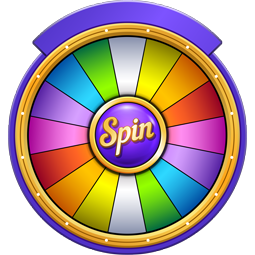
Life Decision Wheel is a free random picker that holds 38 options such as New Hobby, Career Up and Safe. One spin lands on exactly one of them — no signup and no download.
The life decision wheel enters the moment when your options are already researched, already understood, and still somehow unresolved. You are not searching for new answers. You are standing between paths that all make sense, yet none fully commit themselves.
It shifts the focus away from collecting more information and toward recognizing what already fits. The movement matters more than the analysis now.
You pause, revisit the same ideas, and notice the pattern repeating. That repetition is the signal.
The life decision wheel does not introduce new logic. It exposes which direction holds weight when hesitation fades.
When long term choices begin to loop in cycles, a daily decision rhythm that keeps life moving forward can break the repetition without forcing clarity.
Revisiting life goals without turning them into action steps
You think about starting something new. A skill, a habit, a change. It stays in planning mode. The outline feels complete, yet the first step never lands.
This is where the life decision wheel creates separation between thinking and acting. It closes the gap where plans stall without resistance.
Momentum begins quietly. Not dramatic, not forced. Just enough movement to carry the idea forward.
Choosing between personal values and outside expectations
Some options look right because they align with others. Career paths, lifestyle changes, major commitments. They carry external approval but feel slightly off when you sit with them alone.
In contrast, a broader life direction framework that reflects major turning points reveals how different paths hold different emotional weight, not just logical structure.
The life decision wheel works in that space. It does not argue. It reveals preference by removing the need to justify it.
Notice which result feels lighter. That reaction matters more than explanation.
Personal alignment in long term life direction choices
Long term decisions rarely fail because of lack of information. They drift because alignment is unclear. You know the outcomes. You just do not feel anchored to one.
That is why a structured life path comparison across different directions can sharpen what actually fits your pace, not just your plan.
The life decision wheel compresses that process. It reduces layers until only direction remains. No extra framing, no added pressure.
At this point, the result is less about randomness and more about recognition.
When different decision formats begin to overlap, a broader set of wheel based decision tools across multiple life areas can help clarify which structure supports the moment best.
Committing to a path that reflects real priorities
Commitment feels difficult when every option stays open. The longer you keep flexibility, the harder it becomes to choose.
The life decision wheel reduces that openness into a single outcome. Not to trap you, but to let you experience what commitment feels like in real time.
The reaction is immediate. Either it settles or it resists. Both are useful.
That instant feedback often carries more clarity than hours of structured thinking.
Life Choice Matrix
Every meaningful decision sits between risk and safety, movement and stability. Concepts like regret asymmetry and action bias explain why people delay even when they already know their direction. In systems like a structured randomization model used for unbiased selection, removing personal bias reveals patterns that are otherwise hidden. The same principle applies here, but with emotional weight attached.
The decision is not created. It is uncovered.
Sometimes the hesitation comes from trying to solve every life choice in isolation. In those moments, stepping back into a wider decision environment that reflects multiple life situations allows patterns to connect naturally without forcing answers.
Choose a path that reflects who you want to become
Which life goals on this wheel should I prioritize first?
Prioritizing depends on whether you want immediate daily changes or long-term shifts. The wheel mixes smaller routines like Early Bed, Fix Habit, and Start Gym with major milestones like Career Up. You can edit the list next to the wheel to delete items you are not ready for, or use the option to remove each winner so you work through them sequentially.
What happens if I spin a major commitment like Buy Home or Move City?
Landing on major goals like Buy Home or Move City gives you a clear direction to research and plan. Each slice is equal, and the result is chosen using your browser's cryptographic random generator. If you prefer to start smaller, simply remove those entries from the list box, and the wheel will automatically redraw as you type.
How can I save my customized life choices wheel for later?
Wheels can be saved directly in your browser without creating an account. If you want to access your customized list of life decisions on phones, tablets, or other computers, signing in will sync your saved wheels across devices. Your entries stay stored locally in your browser session and are never published publicly on the site.
Can I adapt this life decision wheel for smaller weekly routines?
You can adapt this wheel for weekly routines by replacing major items with everyday actions. Use Text Mode to paste in a new list of habits, like Morning Run, Read Book, or Cooking, one per line. You can also import entries from .csv or .txt files, and the wheel will instantly update to match your specific schedule.
More Decision wheels you might like
More wheels from the same category. Pick one and spin it in seconds.