

 By Noah Reed
Published
By Noah Reed
Published
Random Number Generator for Instant and Fair Number Selection
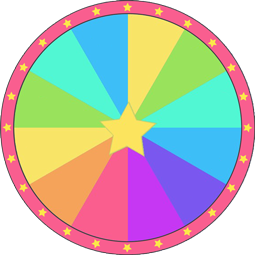
Random Number Generator is a free spinner listing 24 options — 1, 13 and 100 among them. Tap once and the pointer picks one at random.
A random number generator solves one simple problem fast: you need a fair number without second-guessing the result. Instead of guessing or overthinking, the tool produces a clean result instantly, removing hesitation and bias.
Picture a quick decision moment. You’re in a game with friends, someone needs a number, and everyone pauses for a second. No one wants to choose unfairly, and no one wants to slow things down. That small pause is where a random number generator becomes useful it removes the tension and keeps everything moving.
That matters more than it sounds. Whether you’re picking a number for a game, testing a scenario, or making a neutral choice, randomness ensures the outcome isn’t influenced by preference or pattern.
The issue isn’t choosing a number. The issue is trusting the choice. When people pick manually, they often repeat habits without realizing it. Certain numbers feel “luckier,” others get ignored, and the result stops being truly random.
This creates subtle bias. Over time, it affects fairness, especially in games, simulations, or decisions where equal probability matters.
You think it’s random, but you often fall back on the same numbers without noticing.
A structured generator removes that human layer entirely.
Why fairness matters when equal chance is required in games or selections
Random number generation becomes important when fairness and equal chance are required in games or selections. In a classroom raffle or a casual game night, even a small bias can shift outcomes over time.
Instead of relying on instinct, you can shift to a system where every option holds identical weight, similar to how random wheel distributes probability without preference.
This approach doesn’t just feel fair. It is fair. Every number stands on equal ground, and the result reflects that balance.
How a number picker removes bias from manual decision habits
A number picker allows equal probability without manual bias influencing the result. People tend to avoid extremes or repeat familiar numbers, especially under pressure or time limits.
When the selection is handled by a system, those patterns disappear. It becomes closer to how wheel of names works in broader selection tools.
The shift is subtle but powerful. Instead of thinking “which number feels right,” the process becomes “the result is what it is,” which reduces doubt immediately after the choice is made.
Using generators for simulations, testing, and real-world scenarios
Developers and students often use number generators for simulations, testing, and fair selections. In these cases, randomness isn’t optional it’s required for accuracy.
Imagine testing a system where outcomes must vary unpredictably. If the numbers are influenced manually, the entire simulation becomes unreliable. That’s why tools like yes or no wheel or number-based generators are essential in structured environments.
Even outside technical use, this applies. Picking a number for a giveaway or assigning roles randomly follows the same logic: remove control, ensure fairness.
Why instant random results beat guessing under pressure
Instead of guessing a number, the generator provides immediate and consistent results. This matters most when time is limited or when hesitation builds quickly.
Under pressure, people tend to overthink simple choices. They loop between options, question their instincts, and delay action. A generator breaks that cycle in seconds.
The result arrives instantly. No adjustment, no reconsideration. That clarity is often more valuable than the number itself.
When randomness becomes a decision shortcut
In real situations, the goal isn’t always the number. It’s what happens after. A random result forces movement. It creates a direction where none existed.
For example, a student deciding which dataset to test or a gamer picking a starting value doesn’t need the “perfect” number. They need a starting point. Randomness provides that without delay.
This is why random numbers connect closely with probability, statistics, and simulation logic. They aren’t just outputs. They’re triggers for action.
In broader systems, you can see how randomness scales into larger decision frameworks, like a full set of randomized decision tools where numbers, choices, and outcomes all follow the same principle: remove bias, move forward.
What numbers are included on this random number generator wheel?
This wheel comes preloaded with 24 numbers, including consecutive integers from 1 to 20 alongside larger values like 25, 50, 75, and 100. You can edit these values in the list next to the wheel, and the wheel redraws as you type. If you need a custom range, paste your numbers directly using Text Mode.
Can I remove drawn numbers so values like 50 or 100 are not chosen twice?
You can turn on the option to remove each winner from the wheel after it is drawn. This prevents numbers like 1, 20, 50, or 100 from being selected again on subsequent spins. You can also manually delete or re-add entries in the list next to the wheel, and the slices adjust instantly.
How can I change the spin duration to make it longer or shorter?
You can adjust both the spin length and rotation speed directly in the wheel settings. If you want a fast result for numbers like 10 or 25, reduce the duration, or lengthen it to draw out the spin. You can also turn ticking, win, and lose sounds on or off.
Does every number on the wheel have the exact same chance of winning?
Every number on the wheel has an equal probability of winning because all slices are identical in size. The winning entry is chosen using your browser's cryptographic random number generator, ensuring an unbiased outcome every round. No value, whether 1 or 100, receives a higher mathematical weight than any other.
More Random wheels you might like
More wheels from the same category. Pick one and spin it in seconds.