

 By Noah Reed
Published
By Noah Reed
Published
Random Number Wheel for Fair Picks in Fast Classroom Moments
Random Number Wheel is an online random wheel built from 20 equally sized segments, among them 1, 6 and 10. Every spin returns a single result.
A number based spinner becomes the fastest way to assign turns when a class needs instant structure. You are not explaining rules, not negotiating turns, not repeating names. The result appears, and the room moves forward.
In a busy lesson, even small delays stack up. A simple spin removes that pause and replaces it with clear direction. That shift matters more than it seems.
The pressure builds when students start watching each other instead of the task. Some expect to be picked, others try to avoid it. The moment stretches longer than it should, and attention drifts.
The teacher feels it too. You need a neutral system, but you also need speed. Saying names manually slows the flow. Repeating choices raises questions about fairness. The class energy drops in seconds.
Classroom rotation patterns that keep participation balanced
Patterns matter when tasks rotate quickly. If one group speaks twice while another waits, the imbalance shows immediately. A random number wheel fixes that without explanation.
Instead of remembering who spoke last, you rely on a consistent system. That is where a structure like a simple numeric rotation that distributes turns evenly keeps participation aligned with time.
Watch how the pace stabilizes. No one interrupts to question the order. The result stands on its own.
Manual picking versus automated spins in perceived fairness
Manual selection always carries subtle bias, even when unintentional. Students read patterns where none exist. A second spin removes that interpretation.
When choices are automated, the focus shifts away from the teacher. Tools like a binary decision path that simplifies choice outcomes show how reduced options increase trust.
The difference is not technical. It is psychological. The class stops analyzing your decision and returns to the task.
How trust changes when randomness replaces direct control
Trust builds faster when outcomes are not tied to authority. A visible spin creates a shared reference point.
During group activities, this becomes even clearer. A shift toward topic selection that feels neutral and unpredictable keeps engagement stable across different personalities.
Notice how quieter students participate more willingly. The system speaks instead of you.
How being rushed affects how well people join in.
Time limits often reduce thoughtful responses. Students rush because they expect to be called next. That tension lowers the quality of answers.
With a randomized number spinner, that pressure becomes distributed. No one can predict the next turn, so focus returns to preparation instead of anticipation.
Short pauses become more meaningful. The class adjusts naturally without extra instruction.
Selection fairness is not about perfection
It is about consistency across repeated use. When the system behaves the same way every time, doubt fades.
This is where tools connected to probability models, often discussed through researchers like Daniel Kahneman, highlight how perceived fairness shapes behavior more than actual randomness.
Using a structured numeric randomness that mirrors unbiased distribution systems reinforces that perception over time.
The shift is subtle but measurable. Students stop questioning and start acting.
Over time, the role of a random number wheel expands beyond selection. It becomes part of how the classroom operates. Not visible as a rule, but felt as a rhythm.
That rhythm matters when sessions are tight and transitions are frequent. Small decisions no longer interrupt the flow.
In broader use, this connects to how structured randomness supports different scenarios across situations where quick neutral outcomes replace manual choice pressure. The same logic applies beyond a single classroom moment.
Assign roles quickly during busy class moments
Why does this wheel have numbers 1 to 10 repeated twice?
The wheel contains numbers 1 through 10 twice so twenty people can receive a number or draw from a balanced pool. You can edit the list next to the wheel to remove duplicates or add higher values. The wheel redraws instantly as you change entries, and slices remain equal in size.
How do I assign roles to team members with a random number spin?
Give each person or role an assigned number from 1 to 10, then spin to let the wheel pick the match. Because every slice has equal width and uses your browser's cryptographic random generator, every selection is fair. You can also paste your actual role names directly into Text Mode.
Can the wheel stop the same number from being picked twice?
Yes, you can turn on the option that automatically removes each winner after a spin. This prevents drawn numbers, such as 1 or 7, from being selected again in subsequent turns. It works well when assigning different roles to multiple people consecutively until every number slice is gone.
What should I do if I get a number result I do not like?
You can simply spin the wheel again immediately to draw another number. If a specific number like 10 is no longer valid, delete it from the list next to the wheel, and the canvas updates right away. You can also adjust spin speed and duration in the settings.
More Random wheels you might like
More wheels from the same category. Pick one and spin it in seconds.




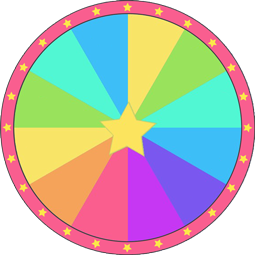


Generate one random letter instantly for faster word game rounds