

 By Maya Brooks
Published
By Maya Brooks
Published
Lucky Game Choice That Turns Random Moments Into Game Night Surprises
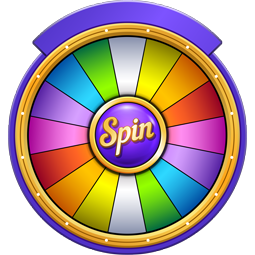
Lucky Picker Wheel is a free online wheel spinner with 24 options, including Chess, Word Hunt and Solo Quest. Click or tap the wheel and it stops on one random result.
At a living room table, dice sit unused while everyone waits for someone to suggest the next game. Lucky game choice enters exactly here not as a rule, but as a shift in energy that replaces hesitation with curiosity.
A parent looks at the shelf, a child suggests something fast, another wants something new. The moment stretches. No one disagrees loudly, but no one moves either.
The pause grows into a pattern. The same games get repeated, not because they’re better, but because they’re easier to agree on.
That’s where lucky game choice changes the rhythm. It doesn’t ask what everyone wants. It reveals what happens next.
How families react when randomness guides playful competition
There’s a common belief that random outcomes feel unfair in family settings. Actually, the opposite happens. When the result is outside anyone’s control, reactions shift from comparison to acceptance.
Children don’t argue over why a game was picked. Adults don’t need to justify the decision. The focus moves instantly to playing, not debating.
This shift appears clearly in shared viewing and play moments driven by neutral selection outcomes, where the process itself removes tension.
Why predictable planning often limits real game variety
Planning seems efficient, but it quietly narrows options. Families fall back on familiar choices because they’re easier to agree on. Over time, variety disappears without anyone noticing.
Random selection interrupts that loop. It introduces games that would otherwise be ignored, creating unexpected combinations of players and experiences.
This contrast becomes obvious when compared to group based selection systems that balance multiple preferences, where structured randomness expands choices instead of restricting them.
Curiosity spikes when outcomes feel surprising, not controlled
The moment before the result appears is where curiosity peaks. People lean in, not because they care about control, but because they don’t have it.
That anticipation transforms simple activities into shared excitement. Even familiar games feel new when they arrive through a surprising path.
This same effect shows up in playful reward moments shaped by unpredictable selection, where the unknown becomes the main attraction.
Exploring new game paths without pre planned expectations
Without expectations, every outcome feels like discovery. Families experience games they wouldn’t normally choose, not because they planned to, but because the system led them there.
This removes the pressure to optimize the choice. The experience becomes about trying, not selecting.
That’s also where number based randomness that drives neutral outcomes helps maintain fairness while opening new directions.
Luck Engine Core
Randomness isn’t about luck in the traditional sense. It’s about shifting responsibility away from people and onto a process. That saves you from overthinking and takes the pressure off making the right choice.
Discussions across platforms like Reddit often highlight probability bias and fairness illusion. People don’t just want fair outcomes they want outcomes that feel fair. Random systems deliver exactly that perception.
Once that perception is established, the experience changes. The group stops analyzing and starts reacting.
Curiosity becomes the driver instead of control.
In wider contexts, moments where shared decisions need neutral direction without bias show how randomness can expand beyond games into everyday group dynamics.
Explore unexpected game paths with one random spin
What board games can this lucky picker choose for game night?
The wheel includes classic board games like Chess, Checkers, Catan, and Risk alongside quick group activities like Jenga, Uno, and Yahtzee. It also features casual challenges like Word Hunt, Memory Game, and Solo Quest. You can use these preset options or edit the list next to the wheel to feature games you actually own.
Can I remove games like Catan or Risk once played?
You can turn on an option that removes each winner from the wheel so it cannot be picked twice. Once your group finishes a game of Catan or Risk, that slice disappears from the wheel and the remaining slices resize. This helps you smoothly move to options like Tile Match or Dice Duel without repeats.
How do I change the spin speed on this game night wheel?
You can adjust the spin length and speed in the settings panel to make turns faster or slower. Choosing a brief spin provides quick choices for fast activities like Speed Round or Coin Flip, while a longer duration builds anticipation for major games. Ticking and winning sounds can also be turned off in those settings.
Does every game on the wheel have an equal chance to win?
Every game listed on the wheel has the exact same chance of being selected. All slices are rendered at the same size, whether marked Jenga, Ludo, or Mystery Box. When you trigger a spin, the outcome is chosen by your web browser's built-in cryptographic random generator, providing a completely fair result.
More Games wheels you might like
More wheels from the same category. Pick one and spin it in seconds.

Break repetitive Sims 4 story loops with unexpected narrative direction


Spin random challenge wheel and trigger quick playful home movement