Dice Roller – Roll a Dice Online Free
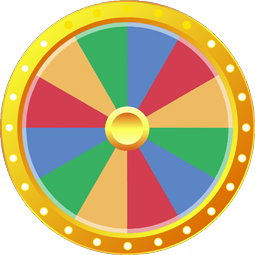
Dice Roller is an online games wheel built from 6 equally sized segments, among them 1, 4 and 6. Every spin returns a single result.
Roll a dice online and get a random number from 1 to 6 instantly. This dice roller works for board games with missing pieces, classroom activities, tabletop sessions, drinking games and any moment that needs a quick random number.
No physical dice, no rolling off the table, no arguing about whether it landed cocked against a book.
How Does the Online Dice Roller Work?
The wheel holds six equal segments numbered one through six. One tap spins it and the pointer lands on a single number. Nothing to install and no signup, so a roll takes about two seconds.
Every face occupies the same slice, which matches a fair physical die. Unlike a real die, this one cannot be weighted, chipped or thrown badly.
Board Games With a Missing Die
The most common reason people look for a dice roller is a board game box that is missing a piece. Monopoly, Ludo, Snakes and Ladders, Backgammon and Yahtzee all stall without one.
An on-screen roll keeps the game moving. Everyone sees the same result at the same time, which removes the usual dispute about what the die actually showed.
Rolling More Than One Die
For two dice, spin twice and add the results. That gives a genuine 2 to 12 range with the correct distribution — seven comes up most often, two and twelve least often, exactly as with physical dice.
If you need a wider range in a single spin, the random number generator handles any span you set, and the random wheel takes a fully custom list.
Classroom and Teaching Uses
A visible dice roll is useful in a classroom for probability lessons, turn taking, choosing a task number, or deciding how many questions a group answers.
Because the roll happens on a shared screen, students can see that the selection was not steered. For picking students rather than numbers, the student picker wheel is a better fit.
Tabletop Games and Custom Faces
Tabletop groups often need dice that are not standard. The entry list is editable, so you can replace the numbers with damage values, outcomes, spell effects or any custom face set.
Six segments is only the default. Add or remove entries and the wheel becomes a four-sided, eight-sided or twenty-sided die just as easily.
Probability Lessons With a Visible Roll
A shared dice roller is a straightforward teaching tool. Roll thirty times, tally the results on the board, and the class can see for themselves that the distribution is flat but the short runs are lumpy.
That gap between what students expect and what they observe is usually the lesson. People predict that six fair rolls will show each number once, and they almost never do.
Two dice make the point better still. Adding the results produces a clear peak at seven, which is a far more intuitive way into distributions than a formula on a slide.
Drinking Games, Chores and Everyday Rolls
Beyond board games, a die settles plenty of ordinary things. Who does the washing up, which chore each person takes, how many minutes the next break lasts, which of six restaurants wins.
Assigning numbers to options first is what makes it work: write the six choices down, number them, then roll. Without that step people re-interpret the result to suit themselves.
For options that are not numbered, the random wheel takes the list directly and skips the translation step entirely.
Is the Dice Roller Really Random?
Yes. Every entry occupies a slice of the same size and the stopping point is generated randomly on each spin, so nothing is weighted and no option is favoured. The wheel keeps no memory of previous spins.
That is why repeats happen. Getting the same result twice in a row is normal for a fair draw, not a sign the wheel is rigged.
More Party and Game Wheels
Try the funny dare wheel, the random challenge wheel or the party game wheel. The games wheel category has more group games.