

 By Noah Reed
Published
By Noah Reed
Published
Class Plan Wheel Before the Next Instructional Segment
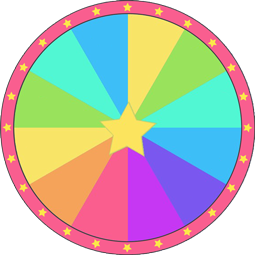
Class Plan Planner Wheel is an online education wheel built from 13 equally sized segments, among them Warm up, Game time and Clean up. Every spin returns a single result.
The lesson objective is already on the whiteboard when morning announcements begin. A restless room is arriving, and the teacher needs to decide which instructional segment belongs in the next open slot. Class Plan Wheel handles that narrow placement choice without rebuilding the timetable or choosing the learning objective.
This is not disrupted schedule recovery. If an assembly or late start has broken the timetable, repair the schedule first. Here, the sequence still works; one open lesson slot simply needs a role such as Warm up, Main task, Review, or Clean up.
It also does not choose the exact activity format. The wheel identifies the segment role. The teacher still decides whether that role becomes a pair discussion, worksheet, demonstration, or retrieval check.
Separate Lesson Segment Roles from Activity Formats
Segment roles answer where the class is in the lesson. Warm up opens attention, Main task carries the core learning, Review checks understanding, and Exit ticket closes with evidence. Group work or Quiz time can describe a phase without prescribing the exact instructions students receive.
Once the role is clear, a classroom task format picker can support a narrower activity choice. Keeping those jobs separate prevents “what part comes next?” from becoming “what exact task should students do?”
For planning beyond one classroom period, a broader study planning structure works at a different level. Class Plan Wheel stays inside today’s lesson timeline.
Check the Objective and Available Time Before the Spin
The learning objective stays fixed before a segment is selected. If students need to compare two scientific explanations, the next phase must still serve that aim. Review might become a two minute retrieval prompt; Game time should remain only if it practices the same target.
Time is the second gate. Lab work may fit with twenty five minutes left but not with seven. Clean up may be right near the bell. Remove roles that cannot fit the remaining window, then spin among the instructionally possible ones.
If the real problem is choosing among class options or groups rather than placing an instructional phase, a class selection decision helper fits that job better. Here, the objective and class context are already known.
Resize the Segment Without Rebuilding the Schedule
A selected segment is a role, not a fixed duration. Quiz time can become three questions. Group work can become a four minute pair exchange. Read time can shrink to one paragraph with one annotation target. Resizing preserves purpose while respecting the clock.
The teacher is not moving every block because the day has gone wrong. The existing lesson remains intact; only the next instructional segment is scaled to the time available. That local adjustment keeps students moving without a visible planning scramble.
Place the Segment Inside Today’s Lesson Timeline
After the objective and time checks, the result should occupy a real position. Review may sit after direct explanation, Break time may separate two demanding phases, and Exit ticket belongs where students can still respond before packing begins.
The Class Plan Wheel works best when each role has a simple entry cue and exit condition. Warm up ends when the opening response is collected; Main task ends at a defined checkpoint; Clean up ends when materials are ready for dismissal.
Use a segment placement gate before the class moves.
Fix the lesson objective, identify the next open slot, and remove roles that do not fit the available minutes. Then spin, resize the selected role, and place it into that slot without changing the objective. The result is a controlled instructional phase, not a replacement lesson plan.
If two roles remain equally suitable, a multi option random spinner can settle that secondary tie. Randomness enters only after the teacher has protected the objective, timing, and classroom constraints.
A quick glance at the objective, clock, and next open slot may be enough to spin the wheel and move the room into the next instructional phase without turning flexibility into schedule repair.
Place one clear lesson segment inside today’s lesson timeline.
Which class activities are included on this planner wheel?
This wheel contains 13 standard instructional segments including Warm up, Intro topic, Main task, Group work, and Exit ticket. It also features transitions like Break time and Clean up. You can modify these entries in the list beside the wheel, and the wheel will automatically redraw as you add, remove, or rename segments for your classroom.
How should I structure a lesson using these wheel segments?
You can spin the wheel to select flexible mid-period segments like Game time, Read time, Quiz time, or Review after your core lecture. To build an orderly timeline without repeating steps, turn on the option that removes each winner after it is picked. This guarantees each activity block is drawn only once during your class period.
Can I upload my own lesson schedule from an Excel or CSV file?
You can import an existing timetable directly from a spreadsheet. The tool supports .xlsx, .xls, .ods, .csv, and .txt files, letting you choose the exact sheet and column where your lesson segments are listed. Once imported, the entries update in the side list instantly without needing an account or any manual retyping.
What is a good variation of this wheel for lab sessions?
A science lab variation replaces general tasks with stage-specific items such as Safety briefing, Equipment setup, Data collection, Hypothesis check, and Station cleanup. You can keep existing entries like Lab work and Exit ticket while typing new labels into the list next to the wheel. There is no limit on entries, so you can include every experimental step.
More Education wheels you might like
More wheels from the same category. Pick one and spin it in seconds.


Randomly select a student while keeping classroom participation balanced



Find a classroom ready debate topic before preparation slows down